Sodium Stearate: Unpacking a Workhorse Chemical
Historical Development
Soap making stretches back thousands of years, but the leap to sodium stearate came with advances in industrial chemistry during the 19th century. Early soap crafters noticed that animal fat and ashes, mixed in the right proportions, produced cleansing bars. By the late 1800s, chemical manufacturing pulled the process out of kitchens and into laboratories. Stearic acid—extracted from fats and oils—met sodium hydroxide, spinning off sodium stearate. Since the industrial revolution, this compound shaped much of what we recognize as modern soap and personal care technology. As manufacturing standards grew strict, sodium stearate took on more technical roles, far removed from simple home soap pots, touching all corners of industry.
Product Overview
Sodium stearate stands as the classic fatty acid salt, a staple ingredient in bar soap, cosmetics, pharmaceuticals, rubber production, and beyond. White, powdery, and faintly fatty to the touch, it toes the line between everyday essential and specialized material. Companies lean on it for its surfactant punch—pulling oil and water together, suspending grime, kicking off lather. Cleaners, deodorants, antacids, and lubricants carry it quietly in their formulas, doing heavy lifting behind the scenes. Lab-grade sodium stearate finds its way into research, acting as a standard fatty acid salt for chemical studies.
Physical & Chemical Properties
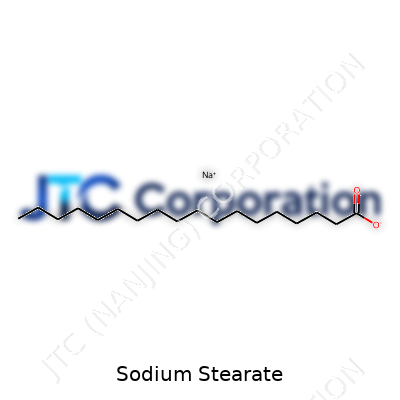
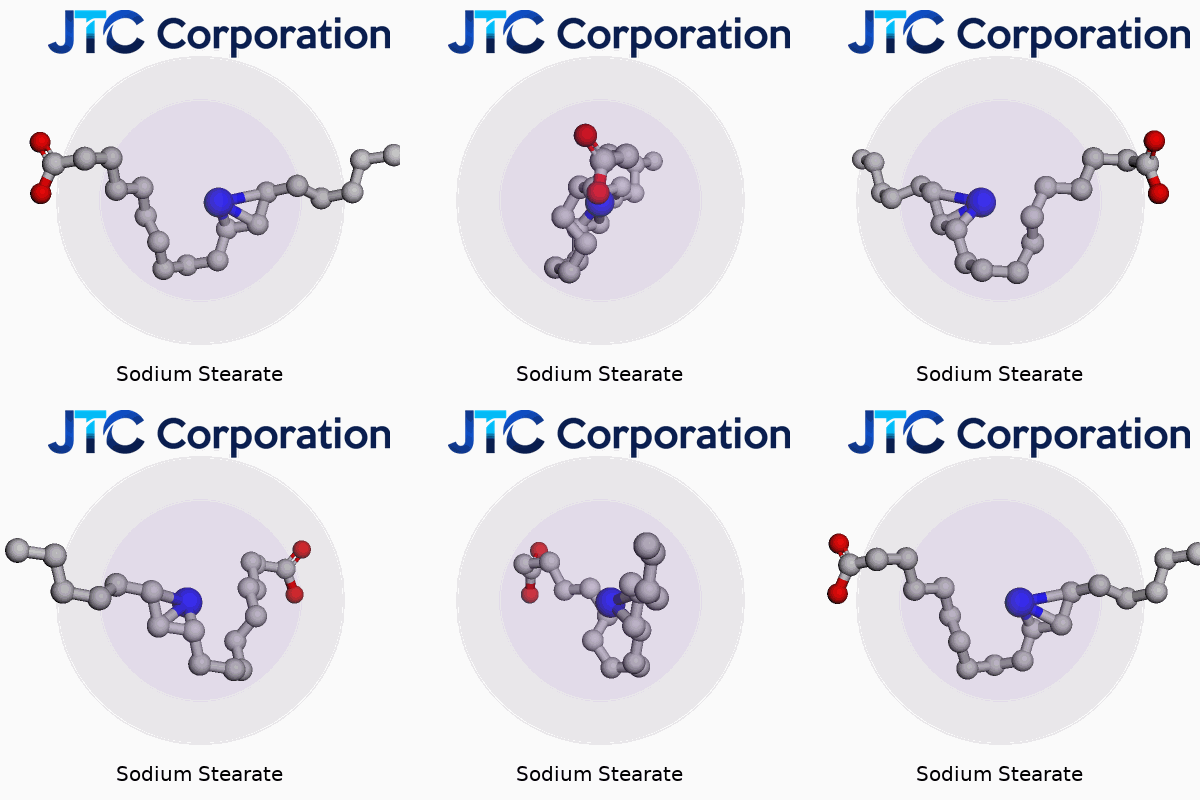
The structure of sodium stearate sets it apart—an 18-carbon tail from stearic acid anchors a sodium head, giving it both hydrophilic and hydrophobic traits. Solid at room temperature, it carries a melting point near 245°C, and it dissolves in water to form a turbid soap solution, usually with a milky cast. Mild alkali properties give it the nudge needed to boost cleaning actions and bind certain metals. On the molecular front, it resists oxidizing agents and breaks down with strong acids, which help push it back to stearic acid and sodium salts. Its amphiphilic nature, created by the fatty tail and sodium carboxylate, delivers dependable performance for emulsifying, thickening, and dispersing jobs.
Technical Specifications & Labeling
Industry benchmarks define purity at over 92%, with strict controls on moisture (under 5%) and insoluble matter. Particle size affects how quickly it dissolves and mixes in various products, and consistency counts for a lot in finished bars and balms. Cosmetic regulations in the US and EU require INCI labeling as “sodium stearate,” and they ask suppliers to ensure the material comes from safe, traceable sources—often vegetable oils, sometimes tallow. Any trace of heavy metals or contaminants sits far below safety cutaways published by regulatory bodies. The right paperwork, material safety data sheets, and certificates of analysis keep procurement in good standing.
Preparation Method
Most sodium stearate comes from a direct saponification process. Fat-rich materials like palm oil or animal fat offer stearic acid, separated by pressing or distillation. Chemists neutralize that acid using caustic soda, usually sodium hydroxide, while controlling temperature to lock in clean, solid salt formation. The mixture precipitates out as a white powder, filtered, dried, and milled to specification. Variations in the process—mixing ratios, temperature controls, or feedstock source—change the downstream product enough that specifications must keep an eye on batch repeatability and purity.
Chemical Reactions & Modifications
Sodium stearate provides a launching pad for plenty of reactions. Strong acids revert it to stearic acid, while certain cations—think calcium and magnesium—swap places with the sodium ion, forming their own “soap scum” salts. In industrial chemistry, sodium stearate helps disperse metal ions, builds gels, and pairs with thickeners. Manufacturers sometimes tweak its structure to form derivatives that perform in controlled-release medicines or as stabilizers in high-performance plastics. Enzymatic processes can tailor its molecular structure, trying to coax different melting points or fluid behaviors.
Synonyms & Product Names
Sodium stearate pops up under several banners. “Stearic acid sodium salt” gets used in regulatory literature. Other names include “Octadecanoic acid, sodium salt” and “Soap sodium.” In cosmetics and food applications, the name “Sodium stearate” wins out on ingredient lists, making it easy for consumers to spot. Manufacturers selling into rubber, lubricants, and plastics industries sometimes market it simply as “Sodium soap.” Each name flags the same versatile compound, linking diverse applications across labeling requirements.
Safety & Operational Standards
Handling sodium stearate goes smoothly in most settings, but sensible precautions make a difference. Dust exposure, particularly in high-volume transfer, can dry out skin or irritate the upper respiratory tract. Chemical safety standards call for gloves, goggles, and dust masks during bulk powder handling. Storage stays best in cool, dry spaces, since the powder picks up water and goes clumpy if left open in humid conditions. Environmental standards push for containment of any wash waters or runoff, since excess soap can hit aquatic systems hard. Regular audits on hygiene and procedures ensure finished goods stay compliant with FDA and EU cosmetic and pharmaceutical guides.
Application Area
Soaps and cleansers draw the biggest poundage, but sodium stearate steps into pharmaceuticals as a tablet lubricant, giving pills their smooth, pressed shape and easy swallow. Cosmetic sticks—deodorants, lipstick, foundations—all rely on its thickening and suspending strengths. In rubber compounding, it acts as a dispersing agent for fillers and colors, supporting tire molds and seals. Lubricant and grease manufacturing benefits from its structure-forming properties, making dense greases hold shape over long storage. Electronic components, particularly molded plastic parts, use grades of sodium stearate as internal lubricants for easy ejection and high finish.
Research & Development
Research keeps building on sodium stearate’s backbone. Polymer chemists investigate its behavior in biodegradable packaging films, looking for ways to control moisture sensitivity and breakdown rates. Nanomaterials researchers study the salt for its role in templating self-assembled structures, pushing at the boundaries of drug delivery and targeted medical imaging. Environmental engineers look into sodium stearate for wastewater oil separation technologies—pulling greasy runoff from industrial plants before it hits rivers. Each field tests structural modifications and blending with other surfactants, building out newer, smarter applications.
Toxicity Research
Extensive study keeps pointing to low acute toxicity for sodium stearate in topical and oral uses. The compound neither builds up in tissues nor triggers carcinogenic responses, and it rapidly breaks down into sodium ions and stearic acid, which the body already processes through normal fat digestion. Eye and skin contact with the powder, much higher than found in finished products, can cause mild irritation. Tested repeatedly in chronic safety trials by health agencies, sodium stearate gets regular updates to reflect new experimental or workplace data, focusing on particle inhalation hazards and effects in sensitive individuals.
Future Prospects
Demand for personal care products grows each year, and cleaner ingredient profiles keep sodium stearate relevant as large brands hunt for safe, simple chemicals. Green chemistry efforts push producers to find plant-based stearic acid, taking palm and coconut oils as mainstay sources for “vegetable soap” grades. Emerging applications in biodegradable plastics, wound-care gels, and industrial wastewater treatment suggest a rising curve for specialty production. Real growth depends on how well raw materials stay traceable and ethically sourced, since the sustainability story holds weight with consumers and industrial buyers alike. As regulations tighten and transparency becomes non-negotiable, sodium stearate’s track record on safety and application keeps it grounded in almost every toolbox.
From Soaps to Deodorant Sticks
Sodium stearate often shows up in personal care products lining bathroom shelves. It works as a key ingredient in traditional bar soaps. People who have made soap at home know that mixing fats like coconut or palm oil with sodium hydroxide leads to soap, where sodium stearate naturally forms during this process. This gives the soap its solid shape and allows it to create a creamy lather when mixed with water.
Commercial deodorant sticks also depend on sodium stearate as a thickener and gelling agent. Because of its structure, it traps oils and liquids, holding them together to form a smooth stick. Without it, most solid deodorants would collapse into a messy paste or melt away at room temperature. We might reach for deodorant on busy mornings and rarely think twice about what holds it together, but sodium stearate stands behind that solid form.
Known Science: Safety and Effectiveness
Dermatologists and researchers have studied sodium stearate for decades. The Cosmetic Ingredient Review panel certifies sodium stearate as safe for use in cosmetics at current concentrations. It doesn’t cause trouble for most people’s skin, and its safety record stands out when checking peer-reviewed literature. Unlike some ingredients that build up harmful residues, sodium stearate breaks down during the washing process and rinses away clean.
People who care about the environment often ask if this ingredient harms waterways or aquatic life. Studies from environmental research journals report that sodium stearate biodegrades quickly in water. It does not linger for months or years, unlike certain synthetic chemicals. In wastewater treatment plants, bacteria feast on it easily, turning it back into simple molecules.
Food and Pharmaceuticals
While not often noticed by consumers, sodium stearate helps the food industry and medicine makers solve some practical challenges. In powdered foods and seasonings, a touch of sodium stearate keeps powdered cheese from sticking or clumping inside its wrapper. Pharmaceutical tablets sometimes include this compound as a lubricant to prevent medicines from sticking to factory equipment.
Anyone who has struggled with crumbling or sticky medicines can understand how frustrating those problems get. Adding sodium stearate in safe limits makes pills easier and more reliable to manufacture, helping ensure people get accurate dosages every time.
Calls for Transparency
Shoppers today often flip over packages and scan ingredient lists. Some see chemical names like “sodium stearate” and have questions. It makes sense to want to know what goes into products we rub on our skin or put in our mouths. Companies should clear up confusion, by offering more information about why sodium stearate appears in their formulas and backing up claims with references.
Seeking Alternatives
People with sensitive skin or allergies look for options. Brands have started testing plant-based or minimalist formulas, sometimes skipping sodium stearate for other thickeners. Some new deodorants and soaps use alternative gelling agents, though they may not offer the same performance at the same cost. Keeping up with research, listening to consumer feedback, and keeping products safe and affordable makes sense for both brands and shoppers.
Final Thoughts: Everyday Chemistry at Home
Sodium stearate works quietly in the background. For most folks, it simply means stronger, longer-lasting products that do their job well. By understanding a bit more about this ingredient and how it fits into daily routines, consumers get the tools to make confident choices at the store and understand the chemistry happening every day at home.
Everyday Uses and Why It Matters
Sodium stearate pops up everywhere. My morning routine starts with it—hand soap, cleanser, maybe even deodorant later in the day. This ingredient shows up so much because it helps bars lather and helps deodorant glide. For years, I didn’t ask what it did to my skin because it never made headlines. Things change fast online, though, and now more people wonder if it belongs in our homes at all.
Breaking Down the Ingredient
This chemical comes from stearic acid linked with sodium salts. Both get used in many body care products. Stearic acid itself is found in cocoa butter and meat, so it isn’t some new lab creation. Cosmetic science uses sodium stearate for its ability to bind water and oil, which soapmakers have leaned on for ages. At its core, it acts as a surfactant, pushing off dirt and creating foam. That’s not controversial in itself.
Many regulators have looked at sodium stearate over the years. The US Food and Drug Administration allows it in food, so what goes on skin usually ends up considered mild by comparison. The Cosmetic Ingredient Review (CIR) panel has reviewed the data, too. They found regular, diluted use in wash-off products is safe. Personal experience backs this—I haven’t noticed redness or rashes after plenty of baths and showers. Friends and family, unless very sensitive, share the same experience.
Concerns Out There, and What Studies Show
Some people do run into problems, mostly folks with eczema or chronic dryness. The main complaint comes down to dryness or tightness after use. Scientific research points to high concentrations possibly disrupting the skin’s barrier. This isn’t unique to sodium stearate; most soaps do this if you overuse them or scrub too hard. Most bar soap lands below 10% sodium stearate. The problems usually come with pure forms or extra strong cleansers.
The risk skyrockets in leave-on products. Thankfully, you won’t see sodium stearate often in leave-on lotion or treatments. Most stick deodorants, where contact is longer, use it for the stick shape but only add enough to hold the product together—not enough for most people to react. If irritation does show up, it vanishes by switching brands or swapping to sensitive formulas.
Weighing Skin Sensitivities and Safer Use
Consumers want more transparency—fair request. Brands have begun listing more ingredient information, and reputable companies patch test their finished products. I always look for this. For people who find their skin stings or flakes, trial and error proves itself as the real answer. Low-alkali soaps, minimal added fragrance, and skipping long soaks save skin where sodium stearate is a concern.
The best thing to do for healthy skin—use gentle cleansers, moisturize after, and pay attention when your skin protests. Science and personal experience keep pointing to safety for most people, with the rare outlier dealing with irritation. Those with known allergies or severe eczema benefit from consulting with a dermatologist, just like with any new skin care routine.
Looking Forward With Common Sense
Sodium stearate isn’t going anywhere. Science keeps backing up its safety, with thousands using it every day without issue. As with many skincare ingredients, the bigger risk comes from overuse, mixing formulas, or ignoring your skin’s reaction. Nothing beats a calm, simple approach: read labels, stay in tune with your body, and don’t buy into alarmist noise without evidence.
Looking Beyond the Label
Every time I see a personal care product or bar of soap listing sodium stearate, I flash back to long discussions with other label-readers—people who just want to know what’s going onto their skin. Sodium stearate plays a big role in those sudsy bars we take for granted, but it also raises honest questions: Is it natural? Is it something lab-made? And does answering that question even matter?
Nature’s Involvement
Sodium stearate forms when stearic acid, found in many animal fats and vegetable oils, meets sodium hydroxide. At its core, this process mimics how soaps have been made for centuries. People rendered tallow or coconut oil, mixed it with ash or lye, and ended up with soap. There’s a comfort to that, a link to methods passed down through families, from generation to generation. Every so often, I still think about my grandmother’s stovetop batches, which smelled rich and earthy, never too sweet, just real.
Modern Processing
Today, though, the world isn’t so simple. Most sodium stearate produced for industry comes from a controlled reaction in factories. These facilities source their stearic acid predominantly from palm oil or animal tallow. The sodium hydroxide, known as lye, is produced through industrial-scale processes. The final product—sodium stearate—doesn’t exist in nature as a pure, stand-alone material. The source, stearic acid, does. That leaves sodium stearate straddling a gray zone: born from nature, but brought to life by chemistry. Just like how flour comes from wheat, but bread only appears after kneading and baking.
Why It Matters
Some people get hung up on natural versus synthetic. It makes sense, considering how much mistrust lingers toward “chemicals.” I’ve met folks who feel uneasy about anything that didn’t grow in a field. Here’s where it gets tricky, though. Natural doesn’t always equal safe or gentle. Poison ivy, after all, is natural. What matters more is safety, transparency, and sustainability. The cosmetic and food industries use sodium stearate for good reasons—it creates a firm texture in bars, and stabilizes products without lingering on the skin or building up in the body. Bodies have enzymes that break down fatty acids without trouble. The U.S. FDA generally recognizes it as safe, and world health groups haven’t flagged it as a risk when used as intended.
Supply Chain Concerns
Still, there’s a reason to dig deeper. Most sodium stearate comes from palm oil, a crop that’s notorious for fueling deforestation. For anyone seeking products better for the planet, this upstream story affects buying choices. Certifications like RSPO (Roundtable on Sustainable Palm Oil) offer some reassurance, but they can’t erase the bigger debate about land use and habitat loss. Some producers use tallow instead—a byproduct of beef and lamb processing—but this approach comes with its own ethical and climate dilemmas. People who avoid animal products for ethical reasons might unknowingly rub tallow-derived soap on their skin.
What To Look For
I always tell friends: read more than the front label. Brands sometimes claim “natural,” but that word can mean almost anything. If sustainability or animal welfare matters, search for statements around ingredient origin. “Vegetable-derived stearic acid” and “RSPO-certified palm” signal a more transparent approach. Better yet, brands that openly trace their supply chains—explaining how they source and process ingredients—deserve some credit.
The Path Forward
Sodium stearate’s story isn’t black and white. The ingredient starts with something natural but gets shaped through human intervention. Instead of just asking “Is it natural?”, ask about sourcing, safety, and impact. Pushing companies to share their practices will do more good for shoppers and the planet than splitting hairs over chemistry.
Understanding What Sodium Stearate Is
Sodium stearate often pops up in places that rarely cross people’s minds. It turns up in soap and deodorant, and it helps mix oil and water together. When the question shifts to food safety, though, many wonder if this ingredient belongs on ingredient lists in snacks, chocolate bars, or baked goods. It sounds almost clinical, something you’d rather keep far away from your plate. But sodium stearate is just a salt that comes from the reaction between stearic acid — a fat found in many foods, including chocolate — and sodium hydroxide. Its most practical role comes from its surfactant properties, meaning it helps blend ingredients that would otherwise separate.
The Food Side of Sodium Stearate
The food industry doesn’t often choose sodium stearate for recipes. Other emulsifiers fill the same role with fewer regulatory complications. Food manufacturers prefer substances like lecithin from soy or egg yolk when they want chocolate to flow smoothly or salad dressings to stay mixed. These alternatives have a long track record in food science and come with approval from authorities in a way that sodium stearate does not for most foods.
The U.S. Food and Drug Administration runs a list called GRAS — “Generally Recognized as Safe.” On this list, you’ll find plenty of food additives that get a green light for widespread use. Sodium stearate, though, doesn’t enjoy that status as a food additive. The conversation shifts quickly when you look for hard science behind using it in edible products. Most regulatory bodies, including the European Food Safety Authority, focus on its use in products that touch skin, not what ends up on the dinner table.
What Does the Science Say?
Science doesn’t support sodium stearate as a food ingredient as much as its cousin, calcium stearate. Calcium stearate finds use as an anticaking agent and carries approval for food use under certain conditions. On the flip side, sodium stearate shows up in pharmaceutical tablets more often than food packaging. Researchers haven’t seen any major health disasters from tiny amounts, but that’s not enough for regulatory agencies to give a full thumbs-up.
Too much sodium stearate can cause digestive upset, and without solid regulation, manufacturers have no guidelines for acceptable limits. That leaves plenty of question marks. Food safety experts play a careful game. They track levels of everything from preservatives to colorings, and they rarely gamble when the science sits thin. Consumer trust grows when food brands choose ingredients recognized not just by regulators, but by nutritionists and toxicologists with years under their belt.
What Makes an Ingredient Suitable for Food?
My time in the kitchen and on farms has shown the importance of clarity in food labeling. People want to eat things that support good health and don’t come with extra baggage. Food companies keep this in mind and stick close to ingredients that have seen long-term use. If sodium stearate isn’t getting the green light, it signals that other options can do the job with less confusion and safer outcomes.
Anyone interested in better food safety can reach out to lawmakers, keep an eye on updated GRAS lists, and keep personal vigilance at checkout. The best solution always involves clear science, honest labeling, and regulators paying attention to how new or unusual chemicals affect both people and the broader food chain. Food science grows in complexity, but finding common-sense choices helps everyone trust what goes on their plate.
Everyday Chemical, Common Concerns
Sodium stearate pops up in products most of us use every day—bar soap, deodorants, even some food packaging and personal care items. Chemically, it comes from reacting stearic acid, a fatty acid found in animal and vegetable fats, with sodium hydroxide. Most folks never even notice it on an ingredient label, but some have started to wonder about possible side effects or allergic reactions. As someone who tries to pay attention to what goes on the skin, I found myself curious too.
Safety Record and Where Problems Might Begin
Sodium stearate carries a long track record of safe use. The Cosmetic Ingredient Review (CIR) panel has looked at it and again at related compounds, and they found no general cause for worry when these ingredients are properly manufactured. The U.S. Food and Drug Administration (FDA) backs this up since sodium stearate shows up regularly in items touching our mouths or hands.
That said, nothing in life fits everyone perfectly. Some people do notice mild irritation, especially if they have sensitive skin. These cases tend to show up among folks using soaps or cosmetics where sodium stearate is one of many ingredients. In my own experience, regular soaps with lots of added fragrances dry out my skin faster than plain ones, and sodium stearate usually sits near the top of those ingredient lists.
Reports of allergic reactions to sodium stearate itself remain rare. Allergists and dermatologists often see contact dermatitis caused by other ingredients in soaps, like perfumes, colorants, or preservatives. But once in a while, sodium stearate can play a role, especially if the person has a history of reacting to fatty acid salts. Swelling, redness, or itching turning up soon after contact sometimes gets traced back to a soap or deodorant with a hefty dose of sodium stearate. Usually, symptoms clear up once the person switches brands.
How to Stay Safe
It helps to read labels, especially for those who know they have sensitive skin or a pattern of allergies. Stick with fragrance-free, simple recipes when possible. Patch tests are useful too: dabbing a tiny bit of a new soap onto your inner arm and waiting a day gives clues about any irritation risk. Healthcare providers recommend this method for anyone with past reactions, as it helps pinpoint the troublemaker ingredient.
People who work making soaps or cosmetics get exposed to higher levels than regular users and sometimes develop dry skin, itching, or mild rashes. Gloves and regular moisturizing usually tackle these problems. Severe reactions stay quite rare, but companies do monitor workplace safety for employees handling large batches.
Better Chemistry Means Fewer Problems
Quality control matters a lot. Companies using sodium stearate in foods or cosmetics must follow manufacturing guidelines that cut down the risk of leftover reactants or impurities. Contaminants can set off reactions even if sodium stearate itself stays gentle for most people. The American Contact Dermatitis Society publishes regular updates about allergens in common products, and sodium stearate still sits low on their watchlist.
Making Safe Choices
Sodium stearate works well for most people. A small slice of the population—mainly those with sensitive or damaged skin—might get irritation. Anyone who spots itching, stinging, or redness should switch brands and talk to a skin doctor. Science keeps an eye on these cases, and product makers look for safer blends all the time. Knowing what goes into your body and onto your skin makes good sense, especially in a world packed with so many products.