Octadecylamine: A Closer Look at an Unassuming Industrial Staple
Historical Development
Octadecylamine first made a mark in the chemical industry during the wave of organic chemistry breakthroughs that followed the Second World War. Back then, scientists pushed the boundaries of what long-chain amines could do for lubricants, surfactants, and textile finishing. Research labs in Germany and the United States set the pace, spurred on by the demand for new materials to serve rebuilding economies. Early processes relied on reducing fatty nitriles sourced primarily from animal fats—a byproduct of soap manufacturing, lending the substance a connection to everyday living.
Product Overview
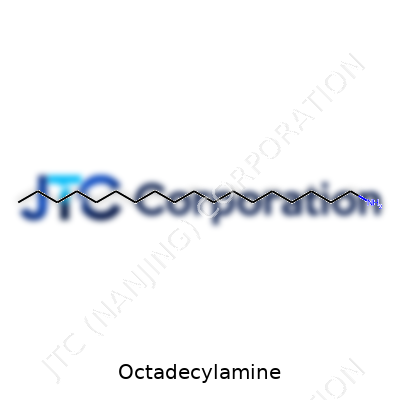
Octadecylamine, also called stearylamine or C18 amine, stands out for its 18-carbon straight-chain structure. It’s not expensive, nor rare, and comes into play across diverse applications. You’ll find it in water treatment plants, giving bite to corrosion inhibitors, and supporting anti-static coatings on plastics. Its backbone—mirror-smooth, saturated hydrocarbon—delivers predictable behavior, making it reliable for industrial chemists aiming for consistency batch after batch. The supply chain for octadecylamine ties closely to global palm and coconut oil trade, as these provide abundant feedstock for long-chain fatty acids, which means price and availability depend directly on global agriculture trends and geopolitical shifts in that market.
Physical & Chemical Properties
In the lab, octadecylamine looks like white flakes or granules with a faint, fatty smell. Melting happens just above room temperature, around 50˚C, so in warmer climates it can turn greasy in your hand. Water doesn’t mix with it; instead, it rides the surface, helping with processes like flotation in mining or oil separation. Octadecylamine provides a clear example of an amphiphilic molecule, where one end pulls toward oil while the amine end attracts acids or small ions. This twin loyalty gives octadecylamine a seat at the table in emulsion stabilization. Its vapor pressure stays low, so workers rarely face issues with inhalation under normal operating conditions.
Technical Specifications & Labeling
For those buying or handling octadecylamine, labeling requires clear attention to purity—commercial lots run from 95% upwards, and trace amounts of unsaturated or shorter-chain amines affect performance in sensitive applications. Specifications list melting point, amine value (as measured by acid titration), iodine value, and, for technical uses, the acid number and molecular weight distribution. Shipping containers must carry hazard markings, especially for bulk quantities, under international standards. Labels point out skin and eye irritation risks, keep-up times for fire prevention, and incompatibility with strong oxidizers.
Preparation Method
Factories commonly produce octadecylamine by catalytic hydrogenation of stearonitrile, itself made from stearic acid via dehydration and ammonia treatment. The hydrogenation runs under pressure and moderate heat, using nickel catalysts to break nitrogen bonds and link atoms smoothly. This process generates clean, high-yield product but does need careful monitoring to keep side-reactions in check and to minimize hydrogen consumption. Afterward, the crude amine undergoes distillation to remove coloring agents, odd-chain homologs, and any remaining water. Rarely, the product is made by reducing amides or employing direct amination of stearic acid, usually for specialty or laboratory-scale batches.
Chemical Reactions & Modifications
The amine group on octadecylamine opens the door to countless options for further chemistry. For corrosion inhibitors, the amine reacts with fatty acids to make salts that anchor onto metal surfaces. In emulsifier manufacture, it quaternizes with alkyl halides to form cationic surfactants for personal care and fabric softeners. Bioconjugation chemists regularly attach octadecylamine’s tail to proteins or nanoparticles, taking advantage of its hydrocarbon-rich nature to promote membrane interactions. Careful sulfation or ethoxylation introduces further functionality, bringing water solubility or altered adsorption properties for textile applications or pigment dispersants.
Synonyms & Product Names
Beyond octadecylamine and stearylamine, chemical catalogs list this substance under names like C18 amine, 1-octadecanamine, and n-octadecylamine. Major manufacturers will package it under trade names, each carrying subtle tweaks in purity or presentation, like flakes for better metering or pre-diluted liquids for faster blending. There’s overlap with specialty blends in the amine class, so buyers read product datasheets closely to make sure they avoid short-chain flavors that can undermine key properties like melting range or color stability.
Safety & Operational Standards
Handling octadecylamine means a focus on skin and respiratory protection. Workers in facilities stick to nitrile gloves and face shields during weighing and transfer, since even brief skin exposure can turn into painful dermatitis, especially for people with allergies to surfactants or amines. Guidelines from OSHA and the European Chemicals Agency stress ventilation in enclosed spaces and immediate cleanup of spills to avoid slip hazards. Storage relies on sealed drums kept cool and dry, separated from acids and oxidizers to prevent hazardous reactions or gradual degradation. Fire risks stay moderate because the substance burns only at high temperatures, but emergency drills include specific first-aid training for possible chemical burns.
Application Area
Industries depend on octadecylamine in subtle but essential ways. Water treatment engineers add it to control scaling and corrosion in boilers, extending equipment lifespans and reducing energy costs by keeping heat transfer efficient. Paper manufacturers mix it into deinking chemicals to lift ink particles from pulp, improving fiber recovery rates and finished brightness. In rubber production, it plays a role as a processing aid, easing mold release and enhancing anti-tack properties. Agrochemical firms include it in formulations for pesticide emulsifiers, where it stabilizes active ingredients and slows degradation in harsh climates. Laboratory researchers decorate carbon nanotubes with octadecylamine to tailor electrical conductance or enhance dispersion in polymer matrices, opening pathways toward flexible electronics and composite materials.
Research & Development
R&D efforts keep discovering new tricks for octadecylamine. Nanotechnology labs use it to modify surface energies, making hydrophobic coatings for microchips and touchscreens. Researchers study its ability to self-assemble on gold, silicon, or graphene, forming ordered monolayers for use in biosensors or selective membranes. Bioengineering teams pair it with lipids and drug molecules to encourage longer-lived delivery systems, especially for therapies where controlled absorption matters. Materials scientists continue to expand its reach into phase-change materials for thermal regulation, employing its predictable melting point to design systems that buffer temperature swings in construction or consumer gadgets.
Toxicity Research
Animal studies flag skin and eye irritation as real concerns, demanding respect for protective equipment in factories and labs. Acute oral toxicity stays low compared with shorter-chain amines, but chronic exposure carries risks to liver and kidney health, with regulatory bodies setting exposure limits for workplace air and accidental ingestion. Environmental toxicologists follow its fate in wastewater streams, where its hydrophobic nature often drives it to settle into sludge rather than floating downstream. Although it biodegrades over time, persistence in soil means runoff from factories and treatment plants faces close monitoring. There’s active debate about possible impacts in aquatic environments, stirring research into more eco-friendly analogues.
Future Prospects
Demand for octadecylamine looks steady, connected with shifts toward sustainable chemistry and efforts to replace petroleum-based surfactants and process chemicals. Rising interest in biodegradable water treatment additives creates opportunity for improved derivatives with faster breakdown rates but similar or better performance. University labs and startup ventures compete to develop greener production methods, using enzymes or more targeted catalysts to cut energy use. As industries try to shrink their carbon footprints and satisfy reality-based ESG standards, the old staples like octadecylamine find themselves re-examined, weighed for both reliability and environmental side-effects, guiding investment in both R&D and supply chain transparency.
What Octadecylamine Brings to the Table
Octadecylamine turns up in more industries than most people realize. It’s a waxy solid that starts with a long chain of 18 carbon atoms, ending with an amine group. At first glance, it might look like just another chemical, but look under the hood, and you’ll see why manufacturers keep coming back to it.
One reason: octadecylamine keeps metal from rusting. Anyone who’s dealt with corroded pipes or struggled with scale in boilers understands how expensive and frustrating corrosion can get. In places like power plants and industrial cooling systems, maintenance crews depend on octadecylamine as a film-forming amine. It coats pipes from the inside, which helps protect steel from oxygen and water. Without treatments like this, large heats exchangers and turbines can lose efficiency or break down long before their expected lifetime. According to plant engineers, film-forming amines also help limit downtime, which saves money and resources.
Consumer Products and Beyond
Chemical manufacturers wouldn’t keep octadecylamine around if it didn’t pull its weight in other products too. Textile plants rely on it as an antistatic agent and softener. Fabrics treated with octadecylamine don’t cling as much — something I’ve noticed every time I haul laundry out of the dryer. Papermakers use it to give a water-resistant finish, which isn’t just handy for packaging but also for money, passports, or business cards expected to last.
There’s a whole story behind its appearance in lubricants and cleaning products. Some machine shops add it to lubricants to keep metal surfaces slick and protected, especially where friction heats things up. In household cleaners or coatings, small amounts change how water behaves, making grime loosen from surfaces. These ordinary improvements lead to better results, fewer stains, and less scrubbing.
Food Packaging and Other Touchpoints
Regulatory bodies keep a close eye on chemicals near food, and octadecylamine has seen food-contact approval in the US and EU for certain uses. It isn’t sprayed directly onto your cereal, but might be present in the coatings that line food cans or cartons. The idea is to avoid anything that could cause harm, such as heavy metals or toxins. Authorities set strict migration limits, doing their best to keep unwanted substances out of food supplies.
In agriculture, octadecylamine appears in some pesticide blends. These might stick to leaves better or improve the spread of other ingredients that keep crops healthy. Researchers track how chemicals act in the environment—especially stuff that doesn’t break down right away. If pressure grows on environmental grounds, alternatives often follow, but it takes time to prove a substitute can do just as much with fewer side effects.
Balancing Benefits and Risks
Safety demands training and oversight. Exposure to concentrated octadecylamine can cause skin and eye irritation. It’s up to employers and workers to handle and store it responsibly, using gloves, goggles, and proper ventilation. Manufacturers and regulators provide guidance; I always tell people not to underestimate simple safety practices.
Innovation continues, with some companies investing in bio-based alternatives and greener blends that crowd out petroleumbased products. By staying informed and focusing on how chemicals interact with people and the planet, industry can meet the practical needs of today while looking out for tomorrow.
Understanding a Long-Chain Amine
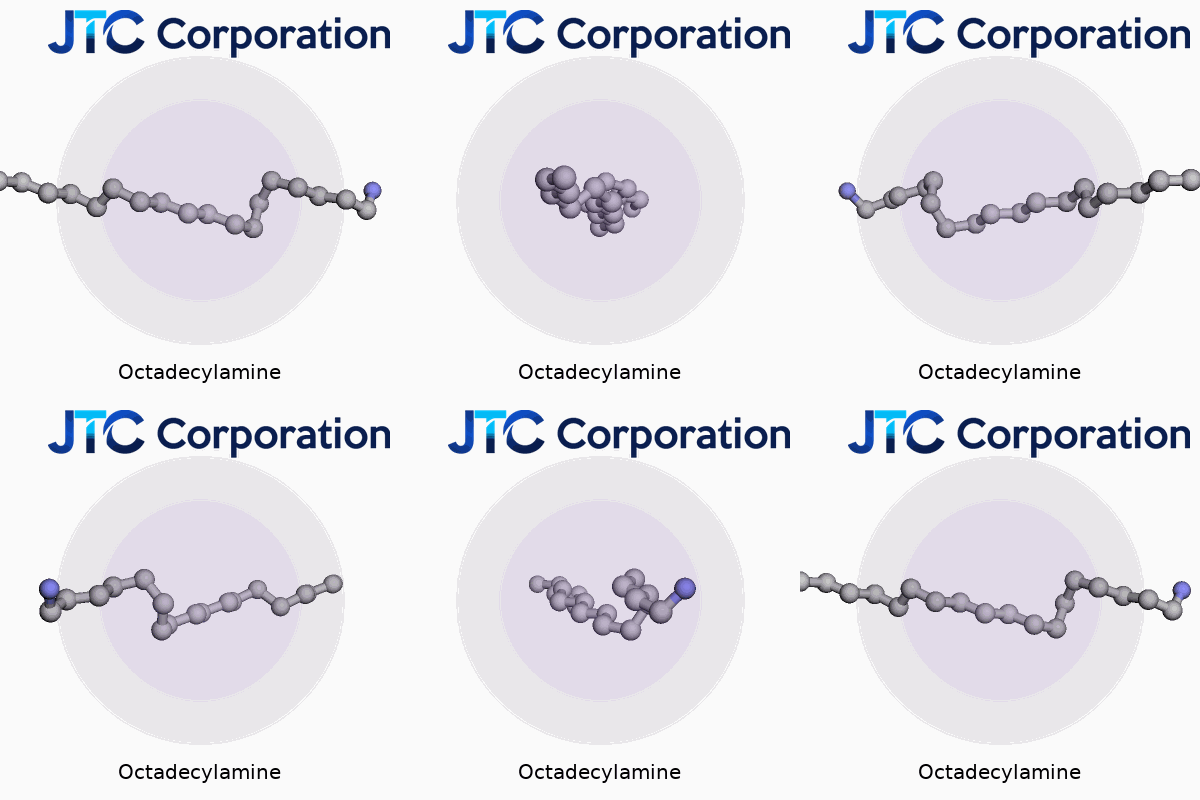
Octadecylamine’s chemical formula is C18H39N. In practical terms, this single compound shapes a surprising range of products and industries, from everyday cleaning supplies to heavy-duty lubricants and industrial additives. The structure packs 18 carbon atoms in a row, topped with a nitrogen group, giving it a tail that acts a bit like a magnet for oils and fats yet also interacts with water and other chemicals.
Why Octadecylamine Shows Up in Everyday Life
Over years of poking around in labs and factories, I’ve watched this molecule in action. Octadecylamine isn’t famous in the way plastics or metals might be, but it makes its presence felt in lots of small, quiet ways. In laundry detergents and shampoos, it tackles grease and dirt thanks to its long hydrocarbon chain. That chain grabs oils, making them easier to rinse away when mixed with water.
In the oil and mining industries, octadecylamine gets dropped into fluids to ward off corrosion. The amine end sticks to metal surfaces, guarding them against damage. I saw it used in water pipes and boilers, where it creates a thin film that keeps rust from eating away at steel.
Health and Environmental Concerns
Handling octadecylamine needs a dose of care. People handling the raw stuff can develop skin or eye irritation. I’ve seen workers wear gloves and eye protection, following good sense and the advice baked into workplace guidelines. In large quantities, runoff can stress aquatic life if waste isn’t treated correctly. Responsible companies test their wastewater and look for biodegradable alternatives where possible.
Research in the last decade suggests that the risk to consumers from finished products stays quite low, but factory workers deserve protection. Always better to handle amines inside well-ventilated rooms and set up spill controls—we’ve learned that the hard way more than once.
Potential Paths Forward
Factories and labs have always looked for safer substitutes and greener chemistry. Plant-based amines offer promising leads, using renewable oils instead of petrochemicals. More engineers now design recycling programs to capture excess chemicals, turning waste back into useful products or at least neutralizing it before dumping.
Though its formula never changes, the story of C18H39N keeps evolving. Smart regulations plus transparent safety data make a real difference, letting people see exactly what goes into their goods and helping businesses clean up their act. Information, honest labeling, and open dialogue help us all manage chemicals like octadecylamine more wisely.
Why the Details Matter
Anyone curious about what goes into cleaners or the ways industries protect their equipment uncovers stories like this one. Octadecylamine’s chemical formula is more than a string of letters and numbers; it outlines a compound with real-world impact, reworking how products perform and how people stay safe around chemicals. Keeping an eye on both science and common sense lets people strike a balance between innovation and well-being each time they tangle with new molecules.
What Is Octadecylamine and Why Should We Care?
Octadecylamine shows up in many factories and labs. On paper, it sounds like just another chemical. In reality, it lives in water treatment, lubricants, pesticides, cleaning agents, and even in mining. Its main job: prevent corrosion or act as a surfactant. Few folks outside industry circles know its name, but anyone near manufacturing could run into it.
What Makes Octadecylamine Dangerous?
I once worked with a team that maintained industrial water systems. We always checked what went into pipes and tanks. Some chemicals, including Octadecylamine, brought their own headaches. This chemical will sting your eyes, orange your skin, and irritate lungs and nose if you breathe its dust or vapor. U.S. National Library of Medicine warns about these exact effects. One misstep—like a spilled bottle or cloudy air—and workers can end up with rashes or coughing fits.
Direct skin contact causes redness, dry patches, or blisters. Eyes tear up and sting fiercely—and if someone rubs those eyes, the pain amps up. Breathing in heavy concentrations leads to headaches or even nausea.
One key fact: long-term or repeated exposure increases risks. Chronic skin contact can cause more severe irritation or allergic reactions. Inhaling this chemical over days or weeks can harm the respiratory tract. This is not just theoretical. I’ve seen workers call out sick due to throat pain after a bad vent malfunction released fumes in a closed workshop. Nobody wants a workplace to turn into a hazard zone, but lax safety checks allow small problems to snowball.
How Does Octadecylamine Harm the Environment?
Octadecylamine doesn’t just affect people. Wastewater treatment experts flag this chemical as toxic to aquatic life. Fish and tiny organisms can’t handle even low doses. Once it washes into rivers or lakes, it can linger and cause ripples up the food chain. Rivers near large treatment plants sometimes show lower fish counts and odd shifts in species when this chemical leaks out. There isn’t much room for error when a mistake can hit entire habitats.
What Should We Do?
Everyone in industry must keep personal safety high on the checklist. This means gloves, face shields, and solid ventilation. Nobody likes the hassle, but I’ve seen people regret cutting corners. Eye wash stations, emergency showers, and clear instructions should not collect dust; they should get checked and used without hesitation. Training makes the true difference—workers need to spot leaks and react quickly, not panic and freeze up.
Even with the best gear, better handling and storage cut risk. Tight containers and regular storage checks reduce the chances of leaks or spills. Labeling can’t be overlooked—that’s how folks avoid mistakes between harmless cleaners and nasty chemicals like this one.
On the environmental front, regular checks for leaks, tighter controls on wastewater, and using safer alternatives where possible make a big impact. Regulations like the EPA’s chemical risk assessments exist for a reason—stay up-to-date and take those guidelines seriously. Everyone benefits when companies share near-miss stories or lessons learned, so others don’t have to repeat their mistakes.
The Bottom Line
It’s tempting to view Octadecylamine as “just another tool,” but that’s risky thinking. Safety rules, gear, and common sense together shape healthier workplaces and protect local water. Scientific research keeps pointing out real risks, so industry has no excuse for ignoring these facts. Doing things right protects both people inside facilities and the communities around them.
Why Storage Choices Matter for Octadecylamine
Octadecylamine shows up in plenty of industries, from lubricants to flotation agents. I’ve worked in a lab that used it for surfactant research, and I can say the right storage steps can help keep people and products safe. Octadecylamine looks like white flakes or powder, and on paper, it doesn’t seem like the most difficult thing to manage. But the reality changes in practice.
Avoiding Moisture and Heat
Once, a coworker made the mistake of storing open bags near a humidifier, expecting nothing would happen. Over time, the powder bridged together into clumps and picking it apart became a hassle. That’s just the tip of the iceberg. Octadecylamine can absorb moisture from the air. Wet product doesn’t blend evenly and may react with packaging or develop odd smells. Anecdotally, our lab notes warned us that moisture can affect its stability and function. This echoes industry guidance: keep it dry and away from temperature swings.
Choosing the Right Container
Polyethylene drums, sealed glass jars, even lined metal cans—these all work, but the seal matters more than the material. I remember using a container with a wobbly lid once, just because it was closer at hand. After a week, the usual waxy feel turned strangely sticky. Turns out, even household humidity can leach in if the lid isn’t right. The difference between a properly sealed drum and a half-open bag can amount to thousands in product loss for bigger operations.
Separating from Incompatible Chemicals
Octadecylamine reacts with oxidizers and acids. On a small scale, mixing accidents smell bad and stain counters. On an industrial scale, that can cause fires or releases of harmful fumes. At one plant I visited, storage rooms followed a simple system: amines on one side, acids on the other, big warning stickers everywhere. Mixing isn’t only a theoretical risk—misplaced drums in warehouses have led to costly cleanups.
Ventilation and Personal Safety
The dust isn’t pleasant. I learned early to wear gloves and a mask, even if I was only grabbing a scoop for quality control. In poorly ventilated rooms, the powder can float and irritate the throat or skin. Proper storage includes ventilation fans and warning signs—people can avoid exposure with basic protocols. The National Institute for Occupational Safety and Health (NIOSH) points out that octadecylamine can cause respiratory and skin irritation. A fact often overlooked: safety showers and eye wash stations matter anywhere the chemical is stored.
Accountability and Labeling
Nothing sets off alarms in a workplace like a mystery drum. Clear labeling cuts confusion, especially if the chemical gets transferred into a secondary container. Date the containers, log who accessed them, and include hazard information right on the label. Simple steps like these prevent accidents and wasted time.
What Works and What Fails
Reliable storage means dry rooms, solid containers, separation from incompatible chemicals, and well-trained staff. I’ve seen small shops improvise with bins and old paint cans, only to run into ruined product or employee injuries. On the other hand, companies that invest in vented spaces with labeled racks rarely see product loss or safety incidents. Storage shapes safety—it’s an everyday step with real payoffs.
Amines at Work: A Close-Up on Octadecylamine
Ask anyone who’s spent time in industrial chemistry labs, and they’ll tell you: octadecylamine shows up in places you might not expect. With its 18-carbon chain and amine group, this chemical becomes more than just a name on a label. Over the years, its flexible chemistry has carried it into several core industries. Not all chemicals cause a stir, but this one does heavy lifting.
Corrosion Inhibition in Oil and Gas
Every oil field faces the persistent problem of metal corrosion, especially in pipelines carrying water and hydrocarbons. In the field, companies add octadecylamine to combat rust and corrosion. It acts like a molecular shield, attaching to metal surfaces and forming a barrier. This approach is widely adopted by pipeline operators and refining plants because downtime means lost money. Data from oilfield service reports show that regular use of amines, including octadecylamine, contributes to prolonged asset life.
Paper Manufacturing Gets Smoother
Papermakers use octadecylamine as part of the sizing process, giving finished sheets a more water-resistant quality. From an operator’s perspective, using the right chemicals ensures the paper holds up to ink and everyday handling. Smudged documents or soggy product don’t impress, so chemical inputs matter. According to a TAPPI technical study, certain amines improve printability and reduce call-backs on product quality. Many of us may not notice, but businesses printing invoices or producing packaging see the difference.
Cleaning and Personal Care Formulations
In the world of detergents and shampoos, octadecylamine acts as a surfactant, helping oils and dirt lift away during washing. Cleansers rely on ingredients with a specific chemical profile to remove grime without irritating skin or leaving films on dishes. Brands in both industrial and home hygiene sectors value safe, dependable cleaning, and market studies point to rising use of amine-based surfactants for exactly these reasons. My own experience testing household cleaners reinforced how ingredient swaps change how products rinse and lather.
Mining Flotation and More
Mining operations, especially those extracting iron ore and silica, use flotation processes to separate one material from another. Octadecylamine acts as a collector, allowing valuable minerals to surface during extraction. Anyone who's spent time near a flotation tank understands why performance additives count. Reliable separation trims waste and energy use. Industry surveys show over half of North American silica plants rely on amines to optimize output.
Lubricants and Antistatic Additives
A good lubricant needs stability and friction reduction, and octadecylamine fits the bill. In automotive and manufacturing settings, it helps oils stick to metal parts, extending machinery life. Antistatic additives in plastics also draw from amines to dissipate electrical charges—without them, parts attract dust or cause static discharges. Plastics magazines report steady demand from electronics and packaging manufacturers, since a minor additive can ward off major static problems.
Safety and Sustainability Concerns Drive Change
Regulators keep a close eye on chemicals like octadecylamine due to their wide use. Companies now test biodegradable versions or blend alternatives to meet environmental guidelines. The Responsible Care® program by ACC highlights member efforts to replace or refine amine use, reflecting a real push to balance performance with safety. For businesses, staying informed about supply trends, new research, and safe handling pays off.