Bis(2-(2-butoxyethoxy)ethyl) Adipate: Dynamics, Development, and Outlook
Historical Development
The evolution of industrial chemistry has seen niche compounds like Bis(2-(2-butoxyethoxy)ethyl) adipate gain commercial relevance. Decades ago, as manufacturers sought alternatives to phthalates and other high-volatility plasticizers, attention turned to adipates for their better performance in demanding environments. Researchers first outlined the synthesis routes for these esters in the mid-1900s, seeking materials resistant to hydrolysis and less prone to environmental leaching. Over time, regulation of hazardous substances in Europe and North America nudged companies toward compounds with better toxicity profiles and biodegradability. This compound quietly transitioned from lab reports to manufacturing plants due to its ability to meet regulatory standards while supporting evolving industry needs.
Product Overview
Bis(2-(2-butoxyethoxy)ethyl) adipate stands out among adipate esters for its low volatility and high solvency. Typically marketed as a colorless, oily liquid with a faint odor, it rarely attracts attention in the consumer space, but it serves as a backbone in numerous industrial applications. Global suppliers list its compatibility with PVC, acrylonitrile-butadiene-styrene, and cellulosic polymers. This versatility means the material has settled in diverse sectors, from flexible hose manufacture to specialty coatings and adhesives. In my line of work, I have seen this compound often requested where performance must balance between flexibility and resistance to extraction by water or oils.
Physical & Chemical Properties
On the technical sheet, Bis(2-(2-butoxyethoxy)ethyl) adipate carries a moderate molecular weight and a boiling point north of 400°C. Its melting point sits below freezing, which helps keep it liquid across a broad range of working temperatures. The compound doesn't mix with water, but effortlessly melds into alcohols, ketones, and most organic solvents. The hygroscopic tendency remains low, so it manages to keep stable even under atmospheric humidity. Measured viscosity and refractive index often mirror those of other specialty plasticizers, but it offers improved resistance to volatility, making it valuable for coatings that must endure outdoor sun or process heat.
Technical Specifications & Labeling
Industry labels often cite the CAS number 141-17-3 alongside the IUPAC nomenclature. The expected purity, depending on the supplier, lands above 98%. Color standards and acid value specifications help quality control teams confirm batch consistency before using this compound in high-end applications. Packaging routines involve tight-sealed drums or intermediate bulk containers engineered to resist the slow but steady migration of organic esters. GHS hazard information usually emphasizes minimal acute toxicity but points toward safe handling practices for bulk storage and transfer, drawing on decades of experience with related adipate compounds.
Preparation Method
Synthesizing Bis(2-(2-butoxyethoxy)ethyl) adipate involves esterifying adipic acid with 2-(2-butoxyethoxy)ethanol. Most producers leverage a Fischer esterification since it runs efficiently with simple acid catalysis and exhaustive water removal. Large reactors heat the acid and alcohol mixture under reflux, with the evolved water pulled away through distillation. This reaction demands a careful hand—too much heat or too strong a catalyst spurs side reactions, reducing yield and introducing off-flavors. The industry preference for moderate pressure and inert atmosphere conditions aims to cut down on impurities. Once the product cools, distillation scrubs away leftover alcohol and low-boiling undesirables, leading to a refined, high-purity final ester.
Chemical Reactions & Modifications
Chemically, Bis(2-(2-butoxyethoxy)ethyl) adipate holds up well under typical use, though like many esters it can't withstand aggressive acids or bases for long. In my experience, exposure to strong alkaline environments kicks off saponification, turning the material cloudy and yielding a mess of fatty acid salts and diols. Under heat, the ester bond stays tight compared with shorter-chain analogs, minimizing volatilization and odor in cured plastics. Occasionally, formulators modify the molecule directly—introducing reactive groups or branching through transesterification—when designing specialty lubricants or tailor-made additives for niche polymers.
Synonyms & Product Names
Beyond its IUPAC label, suppliers list this ester under several synonyms, including "DEHA-bis" and "di(butoxyethoxyethyl) adipate." International shipments refer to local trade names, which sometimes makes sourcing difficult when moving between Europe, the US, and Asia. The global push for better traceability and labeling has closed the gap—barcode-linked safety sheets and harmonized nomenclature make procurement and hazardous goods management easier for multinational buyers and customs teams.
Safety & Operational Standards
Safety remains front and center for chemical handlers. Research into Bis(2-(2-butoxyethoxy)ethyl) adipate toxicity highlights low acute effects but draws attention to chronic exposure risks common to esters. Plant procedures include vapor extraction, chemical-resistant gloves, and regular spill response drills. Workers stick to environmental discharge guidelines, often exceeding local requirements to limit impact on surrounding soil and water reserves. European REACH registration and US TSCA compliance mean that occupational exposure gets managed using established industrial hygiene measures. Transport by road or sea follows the UN Model Regulations for hazardous chemicals, even though the compound falls below immediate "dangerous goods" thresholds.
Application Area
Demand reaches into more corners than many realize. The plasticizer role comes up most often, softening rigid polymers while supporting flexibility in freezing weather that cracks less resilient materials. Automotive interiors carry this compound in dashboards and seat coatings, where low fogging matters for long-term safety. Wire and cable manufacturers rely on it to keep insulation pliable and resistant to breakdown under ultraviolet light. Ink formulators take advantage of its high solvency and low volatility to produce stable, vibrant prints that survive heavy handling. The food packaging industry rarely selects it directly, given strict migration limits, but technical experts continue exploring event tighter controls and purification standards to expand its reach into sensitive packaging.
Research & Development
Laboratories push for greener, more sustainable routes to Bis(2-(2-butoxyethoxy)ethyl) adipate. Recent research targets biobased adipic acid, seeking to tighten the supply chain’s carbon footprint. In advanced labs, scientists have trialed enzymatic processes for esterification to bypass aggressive chemical catalysts entirely. Novel applications appear in medical devices and specialty coatings for electronics—spaces demanding elevated performance and robust safety profiles. Ongoing studies into recyclability might make it easier to reclaim spent product from post-industrial waste, keeping costs down and improving environmental compliance.
Toxicity Research
Over years of published toxicology reviews, acute oral and dermal tests in mammals show very low toxicity for Bis(2-(2-butoxyethoxy)ethyl) adipate. Chronic study data remain more sparse, with some rodent trials documenting mild liver changes at high doses, similar to other aliphatic esters. Regulatory agencies across the US, Europe, and Asia set occupational and environmental exposure thresholds based on these long-term animal studies, often erring on the side of caution. Environmental fate research suggests moderate to good biodegradability, which reassures regulators watching for groundwater accumulation. Environmental activists and academic teams call for transparent, updated data as usage climbs worldwide.
Future Prospects
The next wave of development for Bis(2-(2-butoxyethoxy)ethyl) adipate will likely focus on sustainability, efficiency, and compatibility with new-generation polymers. As regional legislation clamps down on legacy plasticizers with unfavorable toxicity profiles, producers and end-users turn to alternatives with fewer downsides. Ongoing collaboration between chemical manufacturers, regulators, and research institutes brings steady improvements, including upstream biobased synthesis, improved purification, and safer handling procedures. As global production volumes increase, transparent supply chains and harmonized safety protocols help keep risks in check while opening the door for this compound in emerging technologies and geographies.
What People Actually Use This Compound For
Bis(2-(2-butoxyethoxy)ethyl) adipate, or DBEA for short, shows up a lot in industrial and consumer products, even though most people never hear the name. This chemical doesn’t get much attention, but companies rely on it to soften plastics, make things easier to spread, and keep products from drying out. I’ve come across it most often as a plasticizer in coatings and in some flexible PVC goods, which surprised me when I started digging through ingredient lists at my last job in lab supply. Unless you work directly in manufacturing, you probably never notice it—but it’s there, helping deliver the performance we expect from everyday stuff.
Making Plastics More Flexible
Flexible plastics play a key role in plenty of industries—from medical tubing to children’s toys to flooring. DBEA comes into play because it softens polyvinyl chloride (PVC) and other resins, making them bend without breaking or snapping. The plastics industry needs reliable plasticizers because rigid, brittle plastics don’t cut it for things like hoses, wire coatings, or packaging films. DBEA blends smoothly into these materials, creating stretch and flexibility, without leaching out too much over time.
Why Responsible Use Matters
Many people feel concerned about plasticizers, thinking only of phthalates and their health risks. DBEA belongs to a different class, the adipates, which seem to have a better safety track record. Studies have shown lower toxicity for adipate-based softeners compared to common phthalates, which led to regulatory moves in the EU and U.S. to substitute them for older, riskier chemicals. That’s not to say anything is risk-free; regular exposure in the workplace still requires gloves and proper ventilation. Any chemical that becomes widespread calls for good research and transparent safety data. Mixing it into consumer products raises questions too, especially since kids’ items need extra scrutiny.
Cosmetics, Lubricants, and Paint
I saw DBEA show up in some surprising places. Cosmetic formulations sometimes use it to create a silky, spreadable feel. Creams and lotions don’t need to be greasy or sticky, so DBEA helps balance texture. It’s also handy in industrial lubricants and metalworking fluids. These have to stay liquid at a range of temperatures without breaking down, and DBEA keeps them stable. Paints and coatings also rely on this chemical, since it stops them from drying out or cracking before they’re applied, which helps everything go on smoothly and look good longer.
Thinking Ahead: Safety and Sustainability
Regulations continue to evolve, pushing makers to test DBEA for long-term health and environmental effects. This pressure isn’t just about law; customers care more about what’s in their products than ever. Companies have started publishing safety assessments to build trust. As the world looks for safer and greener alternatives, laboratories and businesses face a challenge—how to combine softness, durability, and safety in materials without secrets or tradeoffs. The push for non-toxic, biodegradable additives keeps scientists busy, and DBEA’s role will likely keep changing as more data comes in.
What All Of This Means For The Rest Of Us
People rarely think about chemicals like DBEA unless they pop up in headlines. These compounds quietly shape the products all around us, adding comfort and function to things we use every day. Staying informed about what goes into materials really matters—whether for your own safety, regulatory compliance, or just peace of mind. Responsible sourcing and full disclosure from manufacturers—from PVC hoses to hand creams—only become more important as time goes on.
Real Talk About Chemical Safety
Some chemicals are easy to work with—others demand respect. Bis(2-(2-butoxyethoxy)ethyl) adipate, with that long name, shows up in labs and industry as a plasticizer, a solvent, and sometimes in lubricants. It doesn’t shout danger, but thinking it’s harmless would be a mistake. Anyone who’s handled chemicals long enough knows that complacency causes accidents sooner or later.
Respecting Personal Protection
Gloves are a must. I stick with nitrile gloves because latex sometimes doesn’t last against solvents, and you never want to find out by feeling chemicals soak into your skin. Eye protection isn’t optional. I’ve seen experienced lab techs suffer because of a ‘just this once’ trip to fetch a beaker without goggles. Liquid chemical splashes can ruin your eyes in less than a second, and there’s no magic fix. For splashy work, a face shield backs up your goggles.
Skin protection matters beyond hands. Lab coats or chemical-resistant aprons make a real difference. If a spill happens, clothing provides those crucial seconds to get to a drench shower, instead of chemical burning straight through to skin.
You Can’t Ignore Good Ventilation
Even if the chemical doesn’t have an overpowering smell, fumes build up. I’ve caught headaches after using what seemed like a mild plasticizer because I worked in a cramped space. Always work in a fume hood, keep the sash low, and don’t improvise.
In dry climates, vapor travels around a room faster than you’d think. Just because you can’t smell it doesn’t mean it isn’t there. According to the OSHA guidelines, engineering controls matter just as much as gloves or goggles. Good ventilation saves lungs, so I check that the hood actually pulls air before starting.
Know the Source and Storage Rules
Before using any new chemical, I check the Safety Data Sheet (SDS). It’s not busywork—knowing flash points, reactivity, and storage temperatures avoids dangerous surprises. Bis(2-(2-butoxyethoxy)ethyl) adipate stores in tightly sealed, labeled bottles, away from anything reactive or flammable. More than once, I’ve found badly labeled, oily bottles forgotten on high shelves. That worries me. Clear labels, sturdy shelving, and a designated chemical storage area reduce mistakes.
Spill Response and Disposal
Spills happen. Absorbent pads, containment trays, and buckets of sand stand ready in well-run labs. If liquid escapes, never mop it up with a paper towel and hope for the best. I contain, collect, clean, and then re-clean. All waste goes in appropriate hazardous waste bins—I’ve seen fines handed out for pouring solvents down the drain that seemed harmless. Environmental rules protect our water and soil; a single casual act can cause damage far from the lab.
Training and Team Talk
No one knows all the answers, and relying on memory leads to mistakes. I run through emergency showers and eyewash locations before every big project. Teammates check each other’s PPE. Asking for a refresher on emergency procedures signals you care about everyone getting home safe, not just your own skin. Nobody wants to press the panic button alone.
Building Trust With Safe Practice
Real-world lab experience teaches that safety habits build the trust that underpins good science. Following strong protocols means you don’t just protect yourself—you protect everyone working with you. Chemical safety isn’t paperwork. It’s a culture, reinforced every time you suit up, label a bottle, or double-check a vent. From what I’ve seen, those habits keep accidents from turning into headlines, and keep labs running without a hitch.
What Makes Up Bis(2-(2-butoxyethoxy)ethyl) Adipate?
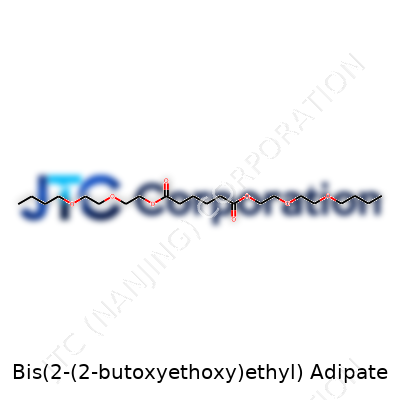
It’s interesting to see how certain plasticizers quietly play a major role in products we use daily. Bis(2-(2-butoxyethoxy)ethyl) adipate is a mouthful, but it’s found in many flexible pvc applications. Its chemical formula is C22H42O8. People in labs—especially ones focused on materials science—recognize its structure right away. Two chains of 2-(2-butoxyethoxy)ethanol attach to an adipic acid core, forming a diester. You’ve got a six-carbon adipic acid backbone flanked by long, flexible arms. Each side features both ether and ester groups, boosting flexibility and compatibility with many polymers.
Chemical Structure: How It All Connects
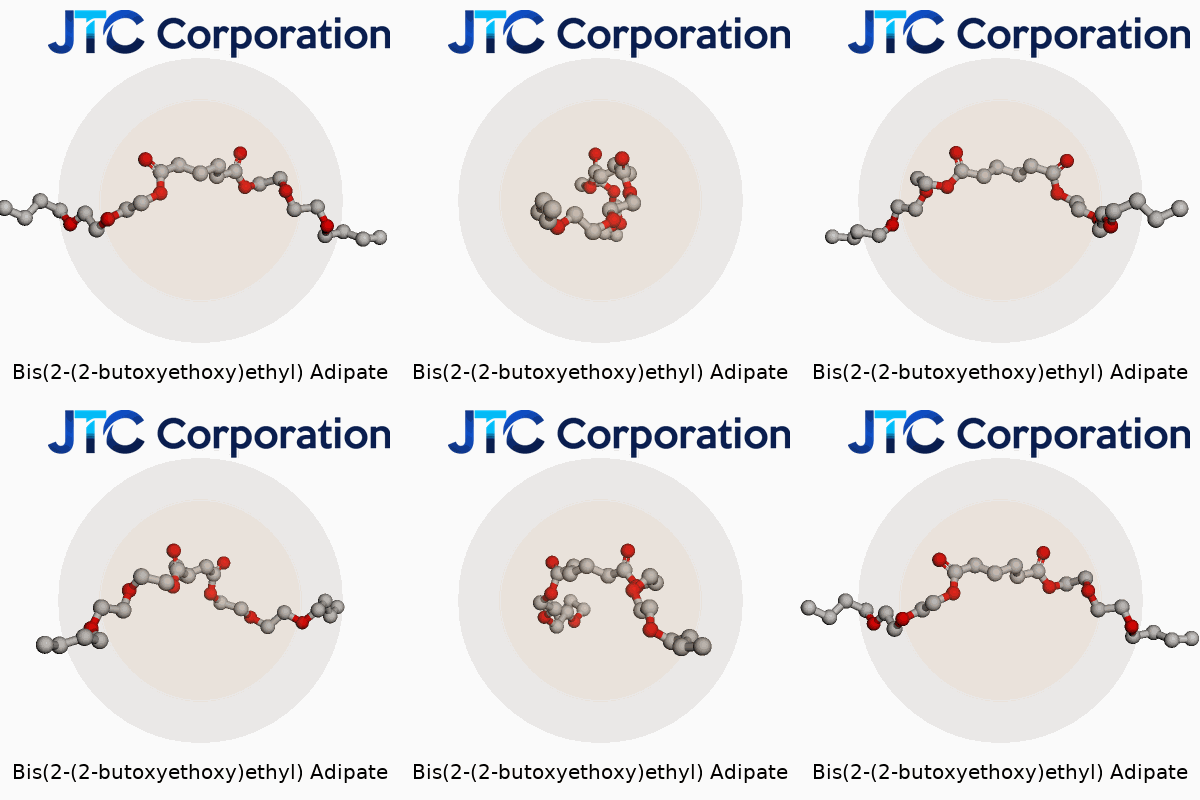
This compound builds around adipic acid, recognized for its six carbon atoms and two carboxyl groups. Each carboxyl group connects through an ester linkage to a 2-(2-butoxyethoxy)ethyl chain. Each chain has a butoxy group joined to two successive ether linkages, ending in an ethyl group tied to the ester oxygen. That gives the molecule an elongated shape, with regions that encourage both flexibility and fluidity.
The structural formula looks like this: Butoxy–(CH2CH2O)2–CH2CH2–O–CO–(CH2)4–CO–O–CH2CH2O–(CH2CH2O)2–Butoxy
Why Structure Matters
Structure guides function. People in industry pick Bis(2-(2-butoxyethoxy)ethyl) adipate because its molecular build lets it squeeze between PVC chains. That keeps plastics soft and workable. In my own experience handling cable coatings, nothing frustrates manufacturers more than brittle cords. Substituting generic plasticizers for this stuff can lead to cracking during the winter. This molecule, though, offers low-temperature flexibility and long-term durability, solving real-world problems that start with a proper fit at the molecular scale.
Connections to Safety and Health
Scientists have raised concerns about some traditional plasticizers leaching into the environment or causing health issues. The structure here keeps volatility pretty low, and migration out of plastics slows down due to its size and polarity. Reports show that it doesn’t act like phthalates, which have drawn attention because of toxicological findings. While no additive gets a clean bill of health in every setting, Bis(2-(2-butoxyethoxy)ethyl) adipate shows a track record of lower risk in its main applications. The chemical bond layout helps keep it stable under typical use, an important feature for toys, food wraps, and hospital items.
Looking Forward: Improving Safety and Performance
Manufacturers keep watching regulations in the EU and US, updating product lines to stay ahead of tight limits on phthalates and other risky plasticizers. This put a spotlight on safer alternatives. The current chemical structure does the heavy lifting in that respect by keeping migration and toxicity in check compared to older options.
To push safety even further, researchers generate data on how these molecules break down in the environment and inside the body. They also tweak side chains or add functional groups to fine-tune flexibility, migration rate, and cost. Collaboration with toxicologists supports smarter choices—for both the environment and end users. The story of Bis(2-(2-butoxyethoxy)ethyl) adipate shows how much careful design goes into even “invisible” ingredients in everyday items.
What’s in This Chemical?
People often run into chemicals like bis(2-(2-butoxyethoxy)ethyl) adipate when they dig into ingredients for plasticizers in flexible plastics, synthetic leather, and maybe even cosmetics. Lab experts and environmental researchers try to figure out if these chemicals play nice with our environment. As much as companies want to market “greener” materials, the story always gets more complicated after you scratch the surface.
Biodegradability Isn’t Just a Buzzword
It matters whether this plasticizer breaks down easily once tossed aside. The pieces making up bis(2-(2-butoxyethoxy)ethyl) adipate sound synthetic and tough, almost built to last. Research from environmental science journals shows that similar adipate compounds never vanish overnight when dumped in soil or water. Large molecules made for commercial durability release slower than simpler substances. Biodegradation studies have shown moderate breaking down in ideal lab settings, but not so much in cooler, real-world places like northern landfills or shadowy lake bottoms.
Environmental Impact from Real Life Experience
I remember local projects testing runoff from plastics, and every time, residues of flexible plastic additives like this one clogged up water filters—even after a couple of weeks. Those chemicals didn’t just float away. At home I try cutting down on cling wraps and vinyl bags partly because the science is clear: many additives escape into the ground long before their packaging fully disappears. Municipal composters refuse certain plastic-laced trash because it messes with natural breakdown.
Known Effects on Wildlife and People
Some worry for good reason about adipate plasticizers winding up in rivers, fish, or farmland. Researchers from the European Chemicals Agency flagged possible toxicity toward aquatic creatures, especially with prolonged exposure. Fish and invertebrates exposed to these types of chemicals sometimes absorb them into tissue—science backs this up with measured bioaccumulation. For people, the direct toxicity runs lower than older phthalates, but regular contact and build-up over time should still be a concern, especially for workers in plastic manufacturing or recycling plants.
Alternatives and Better Choices
Switching out plasticizers can shrink the environmental footprint. Some companies have tried plant-based, rapid-breakdown plasticizers, though these solutions sometimes cost more and don’t always hold up to heat or sunshine. It usually comes down to balancing safety, performance, and price—but paying a little more for safer materials pays off in cleaner rivers and less polluted soil.
Anyone working with bis(2-(2-butoxyethoxy)ethyl) adipate owes it to themselves and their community to handle it carefully, minimize spills, and avoid careless dumping. Choosing products marked compostable or certified biodegradable has helped my family feel better about everyday purchases. It’s a small step, but many small changes really add up over time.
Room for Improvement
Community pressure can move manufacturers to be more transparent about what goes into plastics and how long each additive lingers. People like me keep scanning product labels, and local recycling centers keep posting handy lists of accepted materials. As researchers develop better ways to measure degraded chemical traces in real settings, the fog clears on what these compounds really do outside the walls of a lab.
Sources:- European Chemicals Agency, substance evaluation reports
- Journal of Hazardous Materials, studies on adipate degradation
- Environmental Science & Technology, reports on aquatic toxicity
Why Safe Handling Really Matters
I’ve seen what happens when chemicals get treated like harmless everyday products. That approach invites trouble. Bis(2-(2-butoxyethoxy)ethyl) adipate doesn’t jump out as a household danger, but even the slickest industrial settings can experience leaks, spills, or fires from simple mistakes. It’s a colorless liquid—easy to underestimate—but it belongs among chemicals that demand respect.
Routine exposure at warehouses and manufacturing plants adds up. Nobody wants irritated skin or eyes, not to mention the headaches of cleanup after an incident. I’ve worked in environments where short cuts meant unplanned shutdowns, angry phone calls, and plenty of finger-pointing. Show me a tank with poor temperature control or open drums and I’ll expect worker complaints or a regulatory fine soon enough.
What Actually Works for Storage
Set the container in a cool, well-ventilated space. Humidity and sunlight can transform a stable material into something less predictable. I always push for metal drums with tight lids: they prevent air, moisture, and dust from mixing in, so the liquid stays the way it’s supposed to. Polyethylene containers work too, since the product won’t eat through them. Stacking these drums out of direct sunlight, away from heaters, and not near strong oxidizers preserves quality and keeps workers safer.
Accidents usually start with laziness or someone hoping to cut corners. Pallets aren’t for show—they keep bases clean and prevent drips from pooling around one container and spreading to others. Good labeling saves endless time and avoids tragic confusion. Large lettering and hazard icons make spotting mistakes easier when someone’s tired or in a hurry.
Common-Sense Transportation Moves
Moving this chemical on public roads or across a warehouse demands planning. The Department of Transportation and similar agencies set rules for a reason. I remember shipment delays from the lack of right paperwork or missing hazard labels. Truckers grumble, cargo gets stuck, and a small slip-up leads to costs multiplying quickly.
Sealed drums strapped tightly on pallets cut out rocking or shifting. Railcars and containers ought to get proper checks for leaks or old seals. I’ve worked fire wardens who double-check manifests and always have spill kits handy—water won’t clean this stuff up, so absorbents and neutralizers must sit nearby. It pays to choose sunlight-shielded, dry, and not-too-hot shipping holds rather than baking the product in an open lot or hot deck.
What Science and Regulators Say
Authoritative groups, including the European Chemicals Agency, stress closed systems for liquid plasticizers. The MSDS sheets (Material Safety Data Sheets) give clear-cut parameters: store at 15-25°C if possible, avoid contact with acids and oxidizers, and guarantee first aid washes in reach. OSHA fines for ignoring those basics run into thousands and hurt small businesses especially hard.
Training matters most. Experience with one solvent doesn’t rule out blunders with another. Direct stories about past spills or near-misses teach better lessons than any sign or memo. Rotating old stock so nothing sits forgotten on a shelf dodges staleness and expensive waste disposal fees.
Getting It Right—Today and Tomorrow
Bis(2-(2-butoxyethoxy)ethyl) adipate may never make headlines on its own, but careful storage and smart transport routines let workers finish shifts uninjured and keep companies out of trouble. The industry players who stick to common sense—not just minimum standards—sleep better and save money. It’s worth it to keep a close eye on facility conditions, get warehouse staff invested in safety, and run regular drills. The alternative usually costs far more than a sturdy drum or a refresher class.